06 November 2026
How to Explore International Flavors at a Gin Bar
Presented by @zanetcxe775
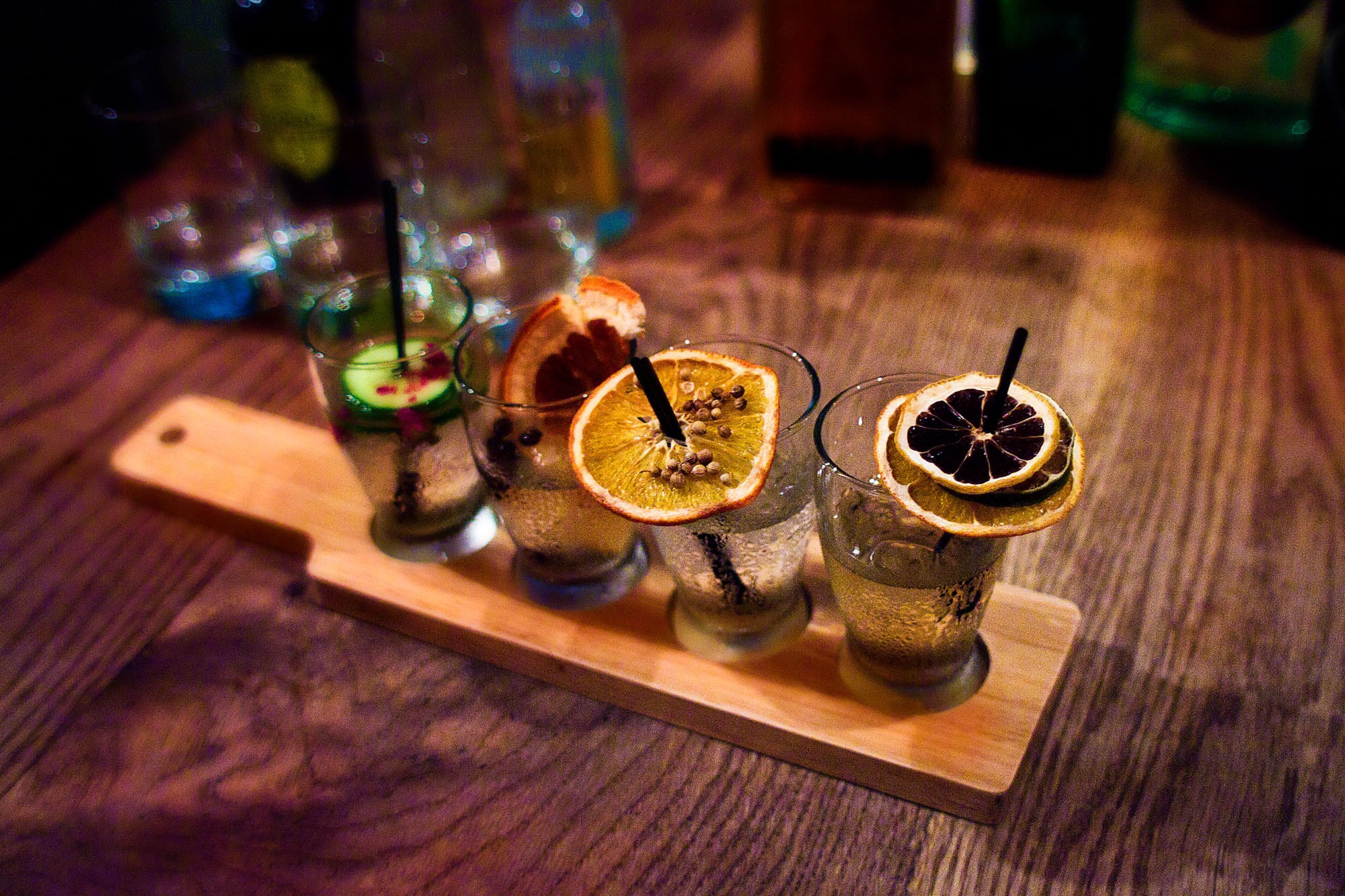
A good Gin Bar offers more than a familiar pour with tonic and a slice of lime. At its best, it acts like a compact map of the drinking world, one shelf at a time. You can move from the juniper-heavy structure of a classic London dry to the citrus lift of a Mediterranean expression, then into the savory, spice-driven profile of a bottle from India or Japan. The pleasure is not only in trying something new. It is in learning how geography, local botanicals, distillation traditions, and bar technique shape what ends up in the glass.
That kind of exploration rewards a little method. Not a stiff tasting protocol, and not a collector’s checklist, but enough curiosity to notice the difference between piney and peppery, between lemon peel and yuzu, between a martini that feels brisk and one that feels almost creamy. If you approach a Gin Bar with that frame of mind, the menu becomes far more interesting. Instead of asking only what is strongest or most expensive, you start asking what each bottle is trying to say.
Start with the idea that gin is a category, not a flavor
People often talk about gin as though it has one obvious taste. In practice, gin is a broad family of spirits tied together by juniper, then stretched in dozens of directions by local botanicals and producer choices. One bottle may lean hard into coriander seed, angelica root, and citrus peel. Another may bring in lavender, rosemary, chamomile, green tea, pink peppercorn, seaweed, olive, or native herbs that are difficult to place if you have never encountered them in a spirit before.
That matters at a Gin Bar because bars with real depth rarely build a menu around one style. They stock bottles with different strengths, textures, and aromatic signatures because they know gin behaves differently depending on how it is served. A bright, high-toned gin may sing in a gin and tonic and disappear in a Negroni. A richer, more resinous gin may anchor a martini beautifully but feel heavy with a sweet garnish.
If you are new to this, treat gin the way you might treat wine from different regions. You do not need to memorize everything. You simply need to notice patterns. London dry often emphasizes structure and clarity. Contemporary gins may pull back on juniper and push floral or fruit notes. Regional styles borrow local ingredients and often reflect local drinking habits. That is where the “international” part becomes rewarding. It is not just branding. Often, you can taste where a gin comes from.
Read the back bar like a travel itinerary
The back bar tells you what kind of exploration is possible before you even open the menu. A serious Gin Bar usually reveals itself in range, not just quantity. Fifty bottles that all lean in the same direction are less useful than twenty-five that span countries, styles, and production philosophies.
Look for clues in provenance. British bottles may form the backbone, but if the selection is thoughtful you should also see Spain, Japan, Australia, France, the Netherlands, Germany, the United States, and perhaps India or South Africa. Each country tends to bring a different sensibility. Spanish gin culture, for example, has influenced the oversized goblet service and garnish-forward gin tonic style seen in many bars. Japanese distillers often deliver remarkable aromatic precision, with botanicals such as yuzu, sansho pepper, sakura leaf, or green tea handled with restraint. Australian gins can be wildly expressive, sometimes featuring native citrus, pepperberry, or eucalyptus-adjacent notes. Dutch genever, which predates modern gin, introduces malt character and can reset your understanding of the category altogether.
You do not need a lecture from the bartender to begin. Just noticing where the bottles come from, and how prominently the menu discusses botanicals, gives you a sense of whether the bar encourages exploration or simply stocks gin as another base spirit.
Ask better questions, get better pours
The fastest way to improve your experience at a Gin Bar is to ask specific questions. “What’s your best gin?” rarely produces a useful answer, because best depends on what you like and how you plan to drink it. A bartender can do far more with preference than with status.
A productive question sounds more like this: I usually like crisp, dry styles, but I want to try something from outside the UK. What would you recommend in a martini? Or: I enjoy citrus-forward gins and I’m curious about Japanese bottles. Which one keeps its character in a simple tonic?
That kind of exchange tells the bartender three things at once. First, you know enough about your own palate to be guided. Second, you are open to comparison. Third, you want the spirit to be the focus. Most good bartenders respond generously to that. They may even offer a tiny nose or a side-by-side suggestion if the bar is not slammed.
One useful habit is to ask what botanicals define the bottle rather than what country it comes from. Country gives context, but botanicals explain flavor. I have seen guests order a gin because it was “Mediterranean” and then dislike it because they did not expect olive leaf or rosemary. I have also seen skeptical drinkers converted by a Japanese gin once they realized the appeal was not novelty, but the elegant lift of yuzu and the peppery snap of sansho.
Taste internationally by changing only one variable at a time
The easiest way to get lost at a Gin Bar is to order wildly different drinks back to back. If your first round is a floral gin and tonic topped with grapefruit and basil, and your second is a barrel-aged gin Negroni, you may struggle to isolate what changed. Was it the spirit, the garnish, the vermouth, the bitterness, the dilution, or the glassware? Probably all of it.
A better approach is to hold the drink style steady while changing the gin. Order two martinis over the course of an evening, made in the same house style, but with gins from different countries. Or have a simple gin and tonic with one bottle, then a second gin and tonic with a contrasting bottle and minimal garnish. This lets the spirit speak.
At tastings, professionals often do exactly that. They remove as many distractions as possible because comparative tasting reveals more than isolated tasting. In a bar setting, you can adapt the principle without becoming fussy. If you are sharing with a friend, order contrasting gins in the same serve and taste each other’s drinks. It is one of the quickest ways to understand how international styles diverge.
The serves that reveal a gin’s character best
Not every cocktail is equally useful when your goal is exploration. Some formats expose a gin’s architecture. Others hide it behind sugar, liqueur, or strong modifiers. There is no shame in the latter, but if you are trying to understand international flavor differences, simplicity helps.
Here are the most revealing ways to taste a new bottle at a Gin Bar:
- A small neat pour, especially if the bartender can add a few drops of water, shows aroma and texture clearly.
- A dry martini reveals structure, spice, and how the gin holds itself against dilution and vermouth.
- A restrained gin and tonic highlights high notes such as citrus, herbs, and florals, provided the tonic is not too sweet.
- A gin fizz or Collins can show how a gin performs in a long, refreshing format without overwhelming it.
- A Negroni is useful later, once you know the gin, because it tests backbone and bitterness tolerance.
That list is not a ranking. It is more like a ladder. If you are serious about learning, start with the simplest serve the bar can offer. A neat taste is not snobbery. It is clarity. Once you have a baseline, the mixed drink becomes more legible.
What different regions tend to bring to the glass
Generalizations can mislead, but they are still useful if you hold them lightly. Distillers break rules all the time, and that is part of the fun. Still, broad regional tendencies can guide your first choices at a Gin Bar.
British gin remains the reference point for many drinkers because London dry built the modern category’s identity. Expect firm juniper, dry citrus, coriander, and a classic spine that works across martinis, gimlets, and tonic serves. Even newer British bottles often riff on that heritage rather than abandon it.
Spanish drinking culture has had an enormous influence on how gin is served. While Spain produces notable gins, its larger impact in bars may be the ritual around the gin tonic: large copa glasses, abundant ice, fragrant garnishes, and tonic chosen as carefully as the spirit. When done well, this style can elevate aromatic, Mediterranean-leaning gins. When overdone, it can turn the glass into a fruit salad. Judgment matters.
Japanese gin often excels in detail. The best examples are not loud. They unfold. Yuzu can give a lifted, almost glowing citrus note that differs sharply from lemon. Sansho adds a tingling spice unlike black pepper. Tea botanicals can create a dry, almost savory calm. These gins are often excellent in very cold, very clean martinis where their aroma stays intact.
French gins sometimes lean elegant and perfumed, though not always. You may find grape spirit bases, softer mouthfeel, and a more floral or vineyard-adjacent sensibility. They can be beautiful in a martini or in a highball-style serve where texture matters.
Australian producers have become especially adventurous. Some bottles are bright and citrusy. Others bring native herbs, desert lime, finger lime, or pepperberry in ways that feel completely distinct from traditional European formulas. A good bartender will usually know which bottles are experimental and which are broadly accessible.
Dutch genever deserves special mention because it often surprises people expecting a standard gin profile. Malt wine contributes grain richness, and the result can feel rounder, earthier, and more spirit-forward. In a traditional room-temperature serve or a simple mixed drink, genever can be a revelation. It also explains something important: modern gin did not appear from nowhere. It evolved.
Garnish can help or wreck the experience
At a Gin Bar, garnish is sometimes treated like decoration. In reality, it is a flavor decision. A peel of grapefruit pushes bitterness and pith. Lemon tightens and brightens. Orange rounds. Rosemary perfumes the surface aggressively. Cucumber cools and softens. Basil can smell lovely but quickly dominate. Black pepper adds a savory edge that works with some gins and fights others.
This is where international exploration often goes wrong. A guest orders an unfamiliar gin, then accepts a garnish chosen for show rather than fit. The garnish takes over, and the gin’s regional identity disappears. I have had Mediterranean-style gins buried under cinnamon and berries in winter menus, and delicate Japanese gins smothered with rosemary because someone wanted the glass to look dramatic.
If you want to understand a bottle, ask for a minimal garnish first. A plain citrus peel, or no garnish at all, can be the smartest move. Once you know the gin, you can experiment. The same bottle may become more expressive with a different tonic or a carefully chosen herb. Exploration works best when you add complexity after you know the baseline.
Tonic water is not a neutral mixer
Many people spend ten minutes choosing Gin Bar The Winslow a gin and two seconds accepting whatever tonic the bar uses by default. That is a mistake. Tonic water brings sweetness, bitterness, carbonation, and often citrus or floral notes of its own. It can sharpen a gin or flatten it. Premium tonic is not automatically better if its flavor profile does not suit the spirit.
A dry, quinine-forward tonic may be perfect with a juniper-led London dry. A softer, less bitter tonic may suit a floral or citrus-heavy contemporary gin. Some Mediterranean-style tonics include herbal notes that can either echo the gin beautifully or create clutter.
At a good Gin Bar, staff should have opinions about pairings. Not rigid rules, just informed preferences. If the bar stocks multiple tonics, ask why one is paired with a certain bottle. The answer often reveals how seriously the team thinks about flavor. Better still, if you are sharing, ask for the same gin split into two short serves with different tonics. Few comparisons teach faster.
How to build an evening of discovery without exhausting your palate
There is a practical side to exploring international flavors. Gin is high-proof spirit, and fatigue sets in before you realize it. After two or three assertive drinks, nuance can disappear. That is why pacing matters more than ambition.
An evening at a Gin Bar goes best when you move from crisp and restrained to richer and more aromatic. Start with a clean serve, perhaps a small martini or a simple gin and tonic built around a classic profile. Then shift to a contrasting region, maybe a Japanese or Australian bottle in the same serve. Save sweeter or more bitter mixed drinks for later, when you already understand the spirit beneath them.
Food helps. Salty snacks, olives, nuts, simple fried items, or a plate with enough fat and starch will keep your palate functional longer than sugary bar bites. Water matters too, not as a moral instruction but as sensory maintenance. Aromatics become muddy when you are dehydrated.
If you are planning a focused tasting at a Gin Bar, keep this progression in mind:
- Begin with a classic style to set your reference point.
- Compare one contrasting international bottle in the same serve.
- Change only one major variable at a time, either the gin or the serve.
- Keep garnish restrained until you know the spirit.
- Stop while distinctions still feel sharp, not after everything starts tasting generically “botanical.”
That may sound disciplined, but it actually makes the evening more enjoyable. You spend less money on random drinks and come away remembering what you liked.
Cocktails can still teach you something
Simple serves are best for analysis, but cocktails have their own value. In fact, some international gins only reveal their full usefulness when mixed. A savory gin with olive or herb notes may come alive in a martini with a particular vermouth. A spice-led gin from India might shine in a gimlet where lime and sugar frame the botanicals rather than obscure them. A dense, traditional bottle with big juniper can cut through Campari and sweet vermouth in a Negroni far better than a delicate floral expression ever could.
The key is to choose cocktails with intent. If a bar offers a long menu of signature drinks, ask which one was genuinely designed around the gin rather than simply assigned to it. There is a difference. In some bars, the house cocktail exists first and the gin is swapped in later. In others, the entire drink was built to showcase a specific bottle’s botanicals. You can taste the difference immediately.
One of the more useful bartender conversations goes like this: I’m curious about this French gin, but I’m not sure a tonic is the best way to drink it. Is there a cocktail here that was built around its floral side without turning sweet? A serious bartender will usually light up at that question, because now the discussion is about balance, not branding.
What experienced drinkers notice that beginners often miss
The first thing many newer drinkers focus on is aroma, and that makes sense. Gin can be explosively fragrant. More experienced tasters, though, often pay equal attention to texture and finish. Does the spirit land lean or oily? Does the juniper build through the sip or vanish early? Does the spice tingle at the back of the palate? Does the citrus read fresh, candied, dried, or bitter? Are the floral notes perfumed in a pleasant way, or do they drift toward soap?
Those details matter because they help explain why a gin works in one context and fails in another. A bottle with beautiful top notes but a thin mid-palate might smell gorgeous neat and disappear in tonic. A weightier gin with less flashy aroma may make the stronger martini. A savory expression may seem odd on first sip and become deeply compelling once paired with the right vermouth or garnish.
This is also where glass temperature and dilution enter the picture. At a well-run Gin Bar, cold serves should be properly cold, and ice should be clean and abundant. Thin, warm, quickly diluted drinks blur international distinctions faster than almost anything else. If two gins seem oddly similar in a busy bar, poor execution may be the culprit rather than the spirits themselves.
Common mistakes when exploring at a Gin Bar
One common mistake is chasing rarity instead of fit. Expensive or limited bottles are not automatically better for your palate or your chosen serve. Another is overvaluing garnish and presentation. A giant goblet full of citrus wheels may look festive, but appearance can distract from the actual purpose of the drink. A third is treating the bartender like a search engine. The best recommendations come from dialogue, not from asking for a top ten.
There is also a subtler mistake: assuming that liking or disliking one bottle from a country tells you much about that country’s gin scene. Japan does not taste like one gin. Neither does Spain or Australia. The useful lesson is narrower. You liked this particular expression because its citrus style, spice profile, or texture suited you in this format. That is valuable knowledge. Keep it specific.
Turning a casual night out into a personal flavor map
The most satisfying way to explore international flavors at a Gin Bar is to treat each visit as one chapter, not the whole book. You do not need to cover six countries in a night. In fact, you probably should not. Choose a theme. Compare Old World and New World styles. Explore East Asian botanicals. Try two takes on Mediterranean gin and note how olive, thyme, basil, or citrus are handled differently. Return another night for genever and classic martinis.
If you keep mental notes, or actual notes on your phone, pay attention to descriptors that mean something to you personally. “Forest floor,” “fresh lemon pith,” “white pepper,” “salty herb,” “soft texture,” “dry finish.” Those phrases are more useful than broad declarations like smooth or strong. Over time, they give you a map. You start recognizing what you seek out and what you would rather skip.
A well-curated Gin Bar makes that process easy because it turns selection into education without becoming didactic. You are still there for pleasure. You are still there to relax. But you are also taking advantage of one of the most diverse spirit categories on the shelf. Few other bar experiences let you move across climates, cuisines, and botanical traditions so quickly.
International flavor in gin is rarely loud in the obvious sense. More often, it appears as a shift in aroma, a spice note you cannot quite place at first, a citrus character that feels brighter or deeper than expected, a finish that lingers with herbs instead of heat. Once you start noticing those differences, a Gin Bar stops being just a place to order your usual. It becomes a place to travel, one measured pour at a time.
The Winslow
243 E 14th St
New York, NY 10003, United States
Phone: +1 212-777-7717
FAQ About Gin Bar
How to do a gin tasting?
Start with a small pour and gently smell the gin before taking a small sip. Notice its juniper, citrus, floral or spice notes, then compare how the flavor changes with a little water or tonic. At a gin bar, ask the bartender to explain the selection and botanical pairings.
How to make the best tasting gin and tonic?
Use chilled gin, fresh tonic and plenty of ice. A common starting ratio is one part gin to two parts tonic, adjusted to taste. Choose a garnish that complements the gin's botanicals and stir gently to preserve the bubbles.
What is the smoothest tasting gin?
There is no single smoothest gin for everyone. Perceived smoothness depends on the botanical recipe, alcohol strength, serving temperature and mixer. Describe whether you prefer citrus, floral, herbal or juniper-forward flavors so a bartender can suggest a suitable style.